In this article
- The Invisible Architecture of Memory
- The Language of the Unspoken
- Identity and the Scented Self
- The Ethics of Beauty and Luxury
- The Phenomenology of Wearing Perfume
- Scent as Narrative
- The Democratization of Luxury and the Preservation of Excellence
- Scent and the Question of Objectivity
- The Future of Fragrance Philosophy
The Philosophy of Fragrance: Where Scent Meets Soul
Perfume is far more than a luxury accessory or a fleeting sensory experience. It is a bridge between the tangible and the intangible, a language spoken not through words but through molecules that dance in the air and settle into memory. The philosophy of fragrance invites us to explore profound questions about identity, perception, time, and the very nature of beauty itself.
The Invisible Architecture of Memory
Long before Proust immortalized the madeleine dipped in tea, humans understood that scent possesses an uncanny ability to unlock memory. Unlike visual or auditory stimuli, olfactory information travels directly to the limbic system, the ancient part of our brain responsible for emotion and memory. This direct pathway explains why a single whiff of a forgotten perfume can transport us across decades, resurrecting moments we thought lost forever.
This phenomenon, known as the Proustian effect, reveals something fundamental about the relationship between scent and consciousness. Fragrance does not merely remind us of the past; it collapses the distance between then and now, allowing us to inhabit two temporal spaces simultaneously. In this way, perfume becomes a form of time travel, a philosophical tool for exploring the fluid nature of memory and the constructed quality of our personal narratives.
The neuroscience supports what perfumers have always known intuitively. Studies show that scent memories are more emotionally intense and longer lasting than memories triggered by other senses. When we smell something deeply familiar, we do not simply recall an event; we re-experience the emotional texture of that moment. This makes fragrance a uniquely powerful medium for exploring questions of identity and continuity. Who are we if not the sum of our memories? And what does it mean when those memories can be so vividly reanimated by something as ephemeral as scent?
The Language of the Unspoken
Fragrance operates in a realm beyond verbal language. While we struggle to describe smells with precision, limited to crude metaphors and borrowed vocabulary from other senses, scent communicates directly with something deeper within us. This ineffability is not a weakness but rather the source of perfume's philosophical richness.
Consider how we talk about fragrance. We speak of notes, accords, and compositions, borrowing the language of music. We describe perfumes as woody, floral, or oriental, using categories that gesture toward but never quite capture the olfactory experience itself. This linguistic inadequacy points to a profound truth: some aspects of human experience resist translation into language.
Philosophers have long grappled with this problem. Ludwig Wittgenstein famously declared that the limits of language are the limits of our world, yet scent suggests otherwise. It reveals dimensions of experience that exist beyond or beneath language, territories of meaning that we navigate intuitively rather than intellectually. Discover our collection and explore these wordless territories.
In this sense, perfumery is a form of phenomenology in practice. It asks us to pay attention to immediate, pre-linguistic experience, to notice the raw quality of perception before it gets filtered through concepts and categories. When a master perfumer creates a fragrance, they are not simply mixing pleasant smells. They are crafting an experience that speaks to something fundamental about what it means to be conscious, to perceive, to exist in a body moving through space and time.
Identity and the Scented Self
What does your choice of fragrance say about you? This seemingly simple question opens onto deep philosophical terrain. The perfumes we wear become part of how we present ourselves to the world, extensions of our identity that precede us into rooms and linger after we leave.
Some philosophers argue that there is no essential self, only a collection of masks we wear in different contexts. From this perspective, fragrance becomes one more mask, a carefully chosen signifier that communicates aspects of our desired identity. A person might wear bold, spicy scents to project confidence and power, or soft, clean fragrances to suggest approachability and simplicity.
But the relationship between scent and identity runs deeper than mere performance. The fragrances we love often reveal something about our inner lives that we might not consciously recognize. They connect to memories, aspirations, and aspects of ourselves that exist beneath the level of deliberate self-presentation. In choosing a signature scent, we are not just selecting a pleasant smell; we are making a statement about who we are and who we wish to become.
This is why the search for the perfect perfume can feel so profound. It is not unlike the philosophical quest for self-knowledge. We are trying to find an external expression that matches an internal reality, to discover something outside ourselves that somehow captures what it feels like to be us from the inside. When we finally find that scent, it feels less like a choice and more like a recognition, a moment of alignment between our inner and outer worlds.
The Ethics of Beauty and Luxury
Luxury perfumes occupy a curious position in contemporary culture. They are beautiful, non-essential, often expensive, and their value is almost entirely subjective. This raises important philosophical questions about the nature of beauty, the ethics of luxury, and what we mean when we call something precious.
The ancient Greeks distinguished between two concepts of beauty: kallos, which referred to physical attractiveness, and to kalon, which encompassed moral and spiritual beauty. Luxury perfumery, at its best, aspires to the latter. It is not merely about smelling good but about the pursuit of excellence, the celebration of craftsmanship, and the belief that beauty has intrinsic value.
Critics might argue that luxury perfumes are frivolous in a world of pressing needs. But this perspective misses something important about human flourishing. We are not merely biological entities with basic needs; we are meaning-making creatures who require beauty, art, and transcendence. Perfume, like music or poetry, serves no practical purpose yet fulfills a deep human need for aesthetic experience.
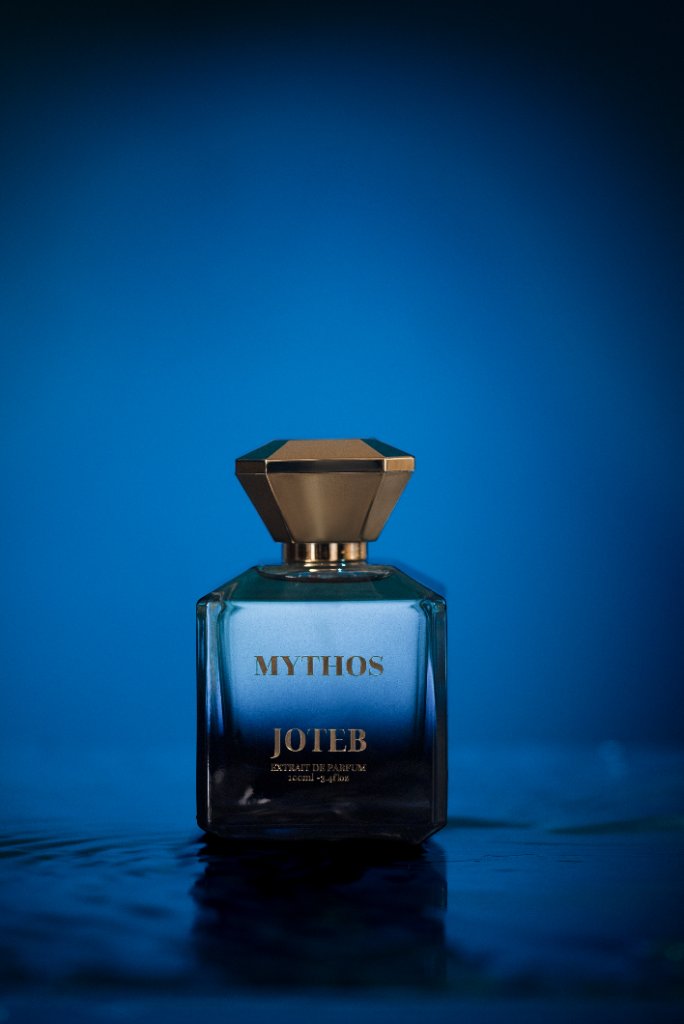
Moreover, the best perfume houses practice an ethics of materials and process. At JOTEB, we believe in using only the finest natural ingredients, sourced responsibly and composed with care. This commitment reflects a philosophy that values quality over quantity, craftsmanship over mass production, and long-term excellence over short-term profit.
There is something countercultural about this approach in our age of fast fashion and disposable goods. To invest in a truly fine perfume is to make a statement about values: that some things are worth taking time over, that quality matters, that beauty and artistry deserve to be preserved and celebrated.
The Phenomenology of Wearing Perfume
What is it like to wear perfume? Not simply how it smells, but what is the lived experience of moving through the world enveloped in fragrance? This phenomenological question reveals unexpected depths.
First, there is the initial spray, that moment of transformation when liquid becomes vapor and settles onto skin. Already you are changed, marked by scent in a way that others will perceive before they see your face. You carry an invisible aura, a sphere of influence that precedes you by several feet.
As the day progresses, the fragrance evolves. Top notes fade, heart notes emerge, base notes anchor and deepen. You are wearing the same perfume, yet experiencing something subtly different with each passing hour. This temporal unfolding mirrors our own lives, where we remain recognizably ourselves even as we change from moment to moment.
There are moments when you catch your own scent, usually unexpectedly. A shift in wind, a turn of the head, and suddenly you smell yourself as others might smell you. These moments create a strange doubling of consciousness: you are simultaneously subject and object, the one who smells and the one who is smelled.
Philosophers call this reflexive self-awareness, and it is fundamental to human consciousness. We are unique among animals in our ability to take ourselves as objects of our own perception, to step outside ourselves and observe. Fragrance facilitates this peculiar split in awareness, creating moments where we encounter ourselves as others do.
Scent as Narrative
Every perfume tells a story, but not in the linear way of novels or films. Fragrance narratives are more like poems, built through juxtaposition, association, and emotional resonance rather than plot and character. Yet they are narratives nonetheless, with beginnings, middles, and ends, with tensions and resolutions, with themes that develop and recur.
Consider a classic chypre fragrance. It opens bright and citrus, full of possibility and energy. The heart reveals complexity, a sophisticated interplay of floral and woody elements that suggests depth and experience. Finally, the base settles into mossy, ambery warmth, a resolution that feels earned and lasting. This progression mirrors the arc of human experience: the brightness of youth giving way to the complexity of maturity, finally settling into the wisdom of age.
Perfumers compose these olfactory narratives with extraordinary skill, layering ingredients not just for their individual qualities but for how they interact and transform over time. Like a novelist choosing precisely the right word, a perfumer selects each molecule for its contribution to the overall story. Learn more about perfume composition through expert resources.
But here is what makes fragrance narratives unique: they are completed by the wearer. The same perfume smells different on different people, as body chemistry alters molecular structures. The story the perfumer began is finished by your skin, your warmth, your unique biological signature. In this collaboration between creator and wearer, perfume becomes a form of participatory art.
The Democratization of Luxury and the Preservation of Excellence
The perfume industry today faces a philosophical tension. On one hand, there is a movement toward democratization, making fine fragrances more accessible. On the other, there is a counter-movement toward ultra-luxury, with niche houses creating increasingly rare and expensive compositions.
This tension reflects broader questions about value, accessibility, and the nature of luxury itself. Should beauty be available to everyone, or does exclusivity enhance appreciation? Is luxury defined by price and rarity, or by quality and craftsmanship?
At JOTEB, we believe these questions present a false dichotomy. True luxury is not about exclusivity for its own sake but about uncompromising quality. It is possible to create perfumes of extraordinary beauty using the finest materials and most skilled craftsmanship while still making them accessible to those who value such things.
This philosophy recognizes that luxury is not about who cannot afford something, but about what goes into making it. A truly luxurious perfume is one where every decision, from sourcing ingredients to final composition, is guided by a commitment to excellence. Explore our philosophy in greater depth.
The goal is not to create artificial scarcity but to maintain standards that mass production inevitably compromises. There is a reason why the finest perfumes cannot be made in unlimited quantities: natural ingredients vary by harvest, skilled perfumers can only oversee so many productions, and time itself cannot be rushed. These limitations are not marketing tricks but inherent in the pursuit of quality.
Scent and the Question of Objectivity
Is beauty objective or subjective? Philosophers have debated this question for millennia, and perfume provides a fascinating test case. On one hand, fragrance preferences seem utterly personal and subjective. What smells divine to one person might be unbearable to another. On the other hand, certain perfumes are widely recognized as masterpieces, suggesting that quality exists independent of individual taste.
The truth, as usual, lies somewhere in between. While preferences are personal, they are not arbitrary. They are shaped by biology, culture, experience, and context. We learn to appreciate complexity in fragrance the way we learn to appreciate complexity in wine, music, or literature. Education refines taste without eliminating subjectivity.
Moreover, there are objective elements to perfume quality. The purity of ingredients, the skill of composition, the balance of elements, these can be assessed by trained noses in ways that transcend mere preference. A master perfumer creates harmonies and tensions, builds structures and progressions that demonstrate technical mastery quite apart from whether any individual finds the result pleasing.
This suggests that beauty in perfume, as in other arts, has both objective and subjective dimensions. There are standards of excellence that can be taught and learned, yet the final judgment of whether a particular fragrance moves us remains deeply personal. The best perfumes achieve both: they demonstrate unquestionable quality while also speaking to something unique in each wearer.
The Future of Fragrance Philosophy
As we move further into the 21st century, perfumery faces new philosophical questions. Synthetic molecules allow perfumers to create scents that have never existed in nature. AI and machine learning promise to revolutionize composition. Concerns about sustainability and ethics force us to reconsider how and from what we create beauty.
These developments do not diminish the philosophical richness of fragrance; they deepen it. They force us to ask what we value in perfume and why. Is naturalness inherently superior, or can human creativity improve on nature? Can a computer create beauty, or does art require consciousness and intention? How do we balance our desire for beauty with our responsibility to the planet?
Visit our collection to experience these questions in practice. Each bottle represents not just a fragrance but a set of choices, values, and commitments. In selecting and wearing perfume, we participate in an ancient conversation about beauty, identity, memory, and meaning.
Fragrance philosophy is not an academic exercise but a lived practice. Every time we choose a perfume, spray it on our skin, and move through the world enveloped in its invisible presence, we are engaging with profound questions about who we are and what matters to us.
In the end, perhaps the deepest philosophical insight of perfumery is this: meaning is not just found but made. Like a perfume composed from individual ingredients, our lives gain significance through the choices we make, the elements we combine, the harmony we create. To wear fragrance mindfully is to practice a philosophy of presence, attention, and aesthetic consciousness.
The next time you spray perfume, pause for a moment. Notice not just the smell but the entire experience: the cool liquid on your skin, the transformation into vapor, the way the scent unfolds and changes. In that moment of attention, you are not just wearing perfume. You are participating in one of humanity's oldest and most profound practices: the creation of beauty from air and imagination.
This is the philosophy of fragrance. It invites us to slow down, to notice, to remember, to imagine. It asks us to consider what we value and why, to explore the boundaries between the physical and the emotional, the remembered and the present. Most of all, it reminds us that we are sensory beings whose richest experiences often arrive wordlessly, as invisible molecules carrying meaning we feel but cannot fully express.
In a world increasingly dominated by the visual and the virtual, fragrance calls us back to the body, to presence, to the immediate and undeniable reality of physical sensation. This, finally, is why perfume philosophy matters: it grounds us in the here and now while simultaneously connecting us to memory, to others, to beauty, and to the ineffable mystery of consciousness itself.
Discover the JOTEB difference and explore how philosophy meets perfumery in every bottle we create.
- #olfactory memory
- #fragrance philosophy
- #scent and emotion
- #perfumery
- #identity
Frequently Asked Questions
- Why does scent trigger strong memories?
- Scent travels directly to the limbic system, the ancient brain area linked to emotion and memory. Unlike visual or auditory inputs, olfactory information bypasses initial analytical filters. This creates a direct connection that allows a specific aroma to re-experience the emotional texture of the past, effectively collapsing the distance between then and now.
- How does fragrance relate to personal identity?
- Fragrance serves as an extension of identity, communicating aspects of the self that exist beyond words. Choosing a perfume is often a quest for alignment between inner reality and outer presentation. Beyond being a signifier to the world, a chosen scent can reflect aspirations and inner truths that are felt rather than articulated.
- Why is it difficult to describe how a perfume smells?
- Scent exists in a realm beyond verbal language. We often borrow metaphors from music, such as notes or accords, because our vocabulary for smell is limited. This ineffability is a core strength of perfumery, pointing to dimensions of human experience that remain pre-linguistic and exist beneath the level of traditional concepts and categories.
- What is the philosophical significance of wearing perfume?
- Perfumery is a form of phenomenology, asking us to pay attention to immediate perception before it is filtered by concepts. Wearing a fragrance is an active engagement with consciousness and time. It turns the act of scent into a tool for exploring the nature of existence, personal narrative, and the fluidity of memory.